

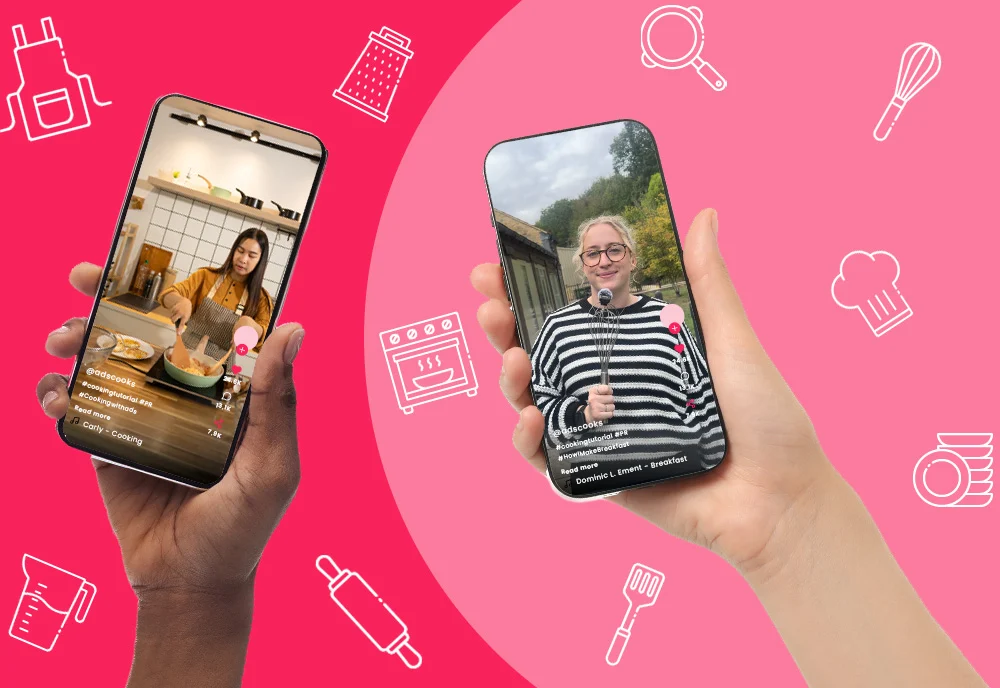

With the rise of food creators across social media, food brands and supermarkets are tapping into the popularity of their content to get products in front of the right audience. Whether it’s a paid partnership with a food creator, sponsored posts with a Michelin trained chef or a PR package for an ex-MasterChef contestant, brands are getting savvy with how they advertise their products.
Why are food brands leaning towards this method?
Across social media, influencers, creators and food industry professionals share recipes, tips and product hauls with their audiences. Brands are tapping into these communities of like-minded people to get their products in front of the right eyes, and it’s working. Consumers are spending more time watching unpolished videos filmed in people’s kitchens than watching traditional, glossy, adverts. Social media algorithms favour this authentic content, pushing creators and the products they talk about onto our feeds.
The different flavours of partnership
Credibility Borrowing
For some brands, they tap into industry professionals and well-known chefs to place their product into the eye of their trusting followers. They are taking advantage of the reputation the individuals have built to remind people that if this expert would use our product, you should too. Poppy O’Toole, @Poppy_Cooks, is a Michelin-trained chef who is affectionately known as the ‘Potato Queen’. Brands such as Nanna Tate, as seen below, work with her to show their products are Michelin-worthy, borrowing her credibility for their own product.
View this post on Instagram
🔗https://www.instagram.com/reel/DaiY_ZeN634/?utm_source=ig_web_copy_link&stkn=MzRlODBiNWFlZA==
Gifting and PR Packages
With gifting and PR, brands send their products to creators without any expectation that they’ll be featured in content. However, if the product has been sent to the right creator, there’s a good chance they’ll share their genuine opinion on it anyway. Ex-MasterChef contestant Hope Batchelor is a good example of gifting and PR in action. Through her socials @toast_with_hope, she shares content that shows off her cooking skills and proven ability in the kitchen, often mentioning the products she’s currently loving, whether she’s found them herself, received them as PR, or as a gift. Her audience responds well to these mentions because they feel natural, fitting seamlessly into the videos and topics she’s already known for.
View this post on Instagram
🔗https://www.instagram.com/reel/DbyGRe8Kx1Q/?utm_source=ig_web_copy_link&stkn=MzRlODBiNWFlZA==
Paid Partnership/Sponsorship
Some brands lean towards paid partnerships. These are beneficial because they allow for precise targeting to the creator’s audience, with a firm obligation to feature the brand, unlike gifting or PR, where there’s no guarantee of a mention. Cookware brand HexClad adopts this route as part of their marketing mix, running paid partnerships with many creators such as Ryan Gilhuly, @gilhulycooks, who creates meals for himself using an array of their equipment. It’s an effective way to guarantee content while ensuring your brand reaches the right people and maintains authenticity.
View this post on Instagram
🔗 https://www.instagram.com/reel/DcriA4NypVX/?utm_source=ig_web_copy_link&stkn=MzRlODBiNWFlZA==
Inside the brand
Some brands are opting to showcase their biggest advocates, their own employees, through employee-generated content (EGC). Whether it’s kitchen staff, product developers or bakers, their content comes across less scripted and in their own genuine voice. This gives audiences an insight into the products and processes behind the brand, while also reflecting what the workplace is really like. A great example of this is Kathryn Turner, the Director of Product Development at M&S Food. On her own social channels, she creates content introducing new products, explaining changes they’ve made, or sharing the history of a product and how it’s developed into what it is today. It’s clear from her videos that she loves her job and the products she helps develop. It’s an innovative way to promote products while also educating audiences on the details behind them and why the team is proud to make them.
View this post on Instagram
🔗https://www.instagram.com/reel/DbkYHrutFsm/?utm_source=ig_web_copy_link&stkn=MzRlODBiNWFlZA==
Tips for food/cookware brands
When it comes to choosing the right marketing route for your product, it’s important to first know who you’re trying to sell to and whether this approach is likely to work for your brand. A clear picture of your target audience will help you pair them with a creator whose interests and niche genuinely match. This ensures the partnership feels natural and appears in the right place.
If you choose a method with a guaranteed content obligation, it’s worth requesting “evergreen” content. This is content that isn’t tied to a specific season or moment, so it can be used at any time and repurposed later. Just make sure this is agreed with the creator upfront, so everyone’s clear on the usage rights of the content.
If you’re unsure where to start, consider turning to your own employees. They know your products better than anyone and can share authentic, accessible content that audiences trust.
Where is food marketing heading?
As audiences become even better at spotting manufactured UGC from genuinely authentic content, brands will need to work harder to maintain that sense of trust and credibility. The good news is, this shift brings real opportunities. Audiences growing tired of the same paid partnerships with big-name creators are likely to respond better to a move towards smaller, more relatable voices. Choosing micro-influencers, with smaller, niche audiences and much higher engagement rates, tends to bring a stronger return on investment for your brand. A win for you and your audience.
It’s likely we’ll also see brands revealing more behind the scenes content, showing their processes and turning to their own staff to create authentic, on-brand content. This is a great way to remain genuine, while being informative, coming straight from the people who know the product best.