



One of the world’s biggest industries continues to skyrocket in economic value. Is it the beauty industry? The health industry? Maybe even food? No, it’s sport. According to research published by Sheffield Hallam University, in 2021 the UK sports sector contributed almost £100 billion to the national economy. This makes it not only a major source of jobs and commercial opportunity, but, perhaps more importantly for us as marketers, a powerful and ever-growing space for community building. With major global sporting events taking place this year, the industry is poised for one of its biggest years yet, and it’s up to us as marketers to capitalise on that momentum.
From Advert To Entertainment
As sport continues to grow, so do the opportunities within sports marketing. Take the evolution of in-game TV advertising. Advertisements that once played a minor role during an annual American football championship game have since evolved into a widely recognised cultural tradition. Today those adverts are entertainment in their own right, featuring star-studded celebrity appearances and highly produced storytelling. Due to this, brands are willing to spend huge sums on very short bursts of attention, because when those adverts work, they can pay off.
According to Statista, ‘in 2026 advertisers were paying an average of eight million U.S. dollars to air a 30-second advert’ during a flagship American football broadcast.
Whilst you may be a local business not quite aiming for a mass sporting advert placement just yet, the key takeaway remains the same: advertising is evolving to become an integral part of sporting culture.
Social Media Still Finds Itself Relevant
Working hand in hand with these growing opportunities, advancements in technology now allow adverts to go beyond mass audiences and reach far more relevant, targeted communities than the broad viewership of the sport alone. Social media, in particular, has emerged as a powerful strategy for building community within the sports industry. Celebrity appearances in adverts translate seamlessly into entertaining reels, meme-worthy content, and more relatable brand messaging, ultimately strengthening audience connection and contributing to long-term community building.
According to Comscore, within the UK’s digital landscape, Sport & Entertainment demonstrates the highest reliance on social platforms. While the industry itself has long been established, its relationship with digital media is accelerating at pace! Social platforms are no longer simply channels for highlights and commentary; they have become primary touch points for fan engagement, brand partnerships and commercial growth.
As audiences increasingly consume content in real time across multiple screens, the sports and entertainment sectors are strengthening their influence, building communities that extend far beyond the live event itself. What was once a traditional, broadcast-led industry is now a digitally amplified ecosystem, and it’s only becoming more powerful.
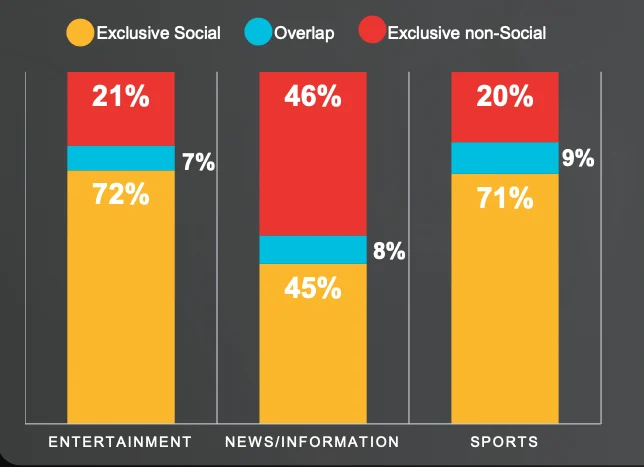
Comscore – The State of Social Media 2025 UK Edition
Sport can help foster parasocial relationships between brands, whether commercial brands or personal brands such as sporting stars, and consumers. These brand associations strengthen emotional connections, ultimately enhancing the relationship between a consumer and a product.
The Future of Sports Marketing
But what does the future of sports marketing look like? In recent years, sport has begun to move into the virtual space. From virtual darts to indoor simulated golf, the industry, like many others, continues to evolve alongside technological innovation. As sport becomes increasingly virtual, it is likely that marketing will follow the same trajectory.
While we hope not to be interrupted by a celebrity appearance advert halfway through a virtual darts work social, the growing integration of sport, technology, and marketing suggests that immersive and digital-first advertising will play an even greater role in the future.
Broadcasting
Closer to home, the real shift is happening on our screens. From social platforms to traditional television, sport is reaching larger digital audiences than ever before. And just when many believed TV was in decline, broadcasters like ITV have demonstrated that, when it comes to live sport, television remains a powerful and highly relevant medium. Recent sporting events have attracted the following individuals:
- Six Nations: 20.3m individuals
- 2025 Women’s Euros: 23.6m individuals
- 2024 Men’s Euros: 41m individuals
- Racing on ITV: 19.7m individuals
- Premiership Rugby: 4.1m individuals
They have also recently expanded into broadcasting the NHL, bringing a more niche sport to UK audiences on a professional stage.
*Information provided through the ITV Sport 2026 Webinar
Next time you’re watching a sports game on TV or scrolling through social media, pay attention to the adverts, partnerships, and associations that stand out. Which brands are actively empowering women’s sport? And which athletes are chosen as the face of everyday products, like your shaving brand? Which athletes are partnering with the major global brands whose logos appear repeatedly on sponsorship boards throughout sporting game broadcasts?
Conclusion
Even for those who do not actively engage with sport, the sports marketing industry offers valuable insight into changing consumer behaviours and serves as a benchmark for the future evolution of marketing strategies. Advertising is no longer solely about selling products or services; broadcasters are embracing change rather than resisting it, and the growth of communities across social platforms and live sporting environments demonstrates how modern marketing can successfully build engagement, loyalty, and cultural relevance.
Glossary
Parasocial: one-sided, often intense, emotional bond that a person feels toward a media figure, celebrity, or influencer they do not personally know.