
As 2025 ended, many marketers likely spent hours trying to predict what trends would define 2026. Increased use of AI across all media formats, a rise in community-driven content with the World Cup and Olympics taking place this year, or even further growth in social commerce all seemed like reasonable predictions. While these trends may well come to pass, could anyone have predicted the first major obsession of the year? A revival of 2016.
Nostalgia has lingered as a recurring trend for years, driven by a universal desire, regardless of age, to return to the “good old days.” However, 2016 has struck a particularly powerful nostalgic chord across generations. But why? Why has the phrase “2026 is the new 2016” taken hold?
2016 Search Statistics
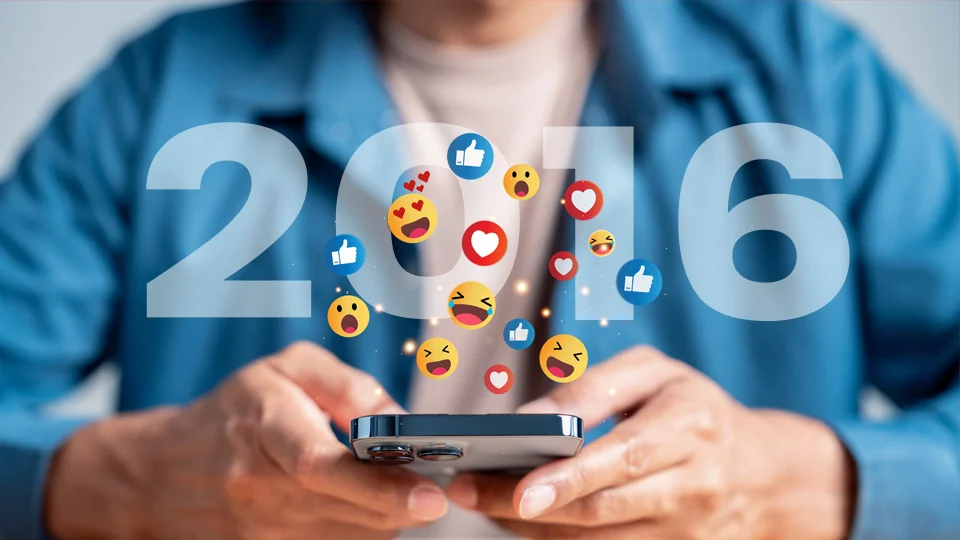
For the first few weeks of the year, social media users have been flooding each other’s feeds with Snapchat dog filters and flower crowns, resurfaced Stranger Things season one content (not because another “final” episode has been released), while also reminiscing over sociocultural moments such as the Mannequin Challenge and Pokémon Go. You might be on the wrong side of the algorithm if you’re yet to come across a ‘nostalgic’ photo however, reported by abc News, “The #2016 hashtag has already been used in over 1 million posts on TikTok and over 37 million posts on Instagram” and the Independent stating “TikTok reported that searches for the term ‘2016’ surged by 452% in one week.”
🔗 Is it 2026 or 2016? Social media users turn back the clock in viral trend
Ironically, while social engagement around this trend continues to rise, one reason marketers believe its gaining traction is because 2016 is widely seen as a “prime” year. Social media had already been established, yet it hadn’t become as polished or commercialised as it is today. It feels like a distant memory, before ads dominated our feeds, brand partnerships appeared on every post, and influencers were simply bloggers and vloggers. As a result, 2016 has made a comeback, driven by a collective longing to return social media to the fun, authentic space it once was.
The emergence of this trend doesn’t just highlight how far social media has come over the past decade; it also reveals how our content consumption habits have evolved. Today, we consume content at an excessive rate, with platforms engineered to sustain our dopamine hits, something that simply didn’t exist in 2016. Back then, you posted to celebrate a birthday, share a funny photo, or check in on what friends were doing. Now, overconsumption and dopamine-driven feeds have created the perfect formula to keep us doom-scrolling and our screen time climbing.
Is It Relevant to Me or My Brand?
But, should you or your brand embrace this trend? 100%. While audiences remain glued to their screens, many of us are quietly craving a break from the overly constructed feeds we spend hours on. Leaning into nostalgia, whether by sharing throwback photos from your brand’s ‘time capsule photo album’ or posting what you were up to this time ten years ago, can help you and your brand become part of the wider conversation. We’re living in a moment where cultural touchpoints can seamlessly weave their way into marketing strategies, boosting awareness and even driving conversions, making this 2016 throwback a perfect chance for you or your brand.
As algorithms grow more demanding and AI takes centre stage for social media conglomerates, this 2016 trend emerges not as a retreat, but as a warm, familiar memory of a time that felt simpler, more playful, and more authentic.